When you build a mission-critical facility, some of the most important work happens before the first concrete pour.
Well before construction begins, everyone involved must understand how the facility will operate, identify potential risks, coordinate complex systems, plan for long-lead equipment, and determine how everything will eventually be tested and turned over to the owner.
That approach to preconstruction planning and preparation matters on any commercial construction project. In a mission-critical environment, it can determine whether a project is predictable and controlled or filled with avoidable risk.
With more than 90 years of construction history in Nashville, Crain has decades of experience building telecommunications facilities, network infrastructure, switch centers, redundant power systems, and other complex mission-critical projects across the Southeast.
We recently asked two of our team members, Alex Ward and Chad Thomas, to share what they have learned from their experience on mission-critical projects. Their answers reinforced something we’ve seen throughout our work: the best opportunity to reduce risk is before construction begins.
Lessons From the Field: Planning for Mission-Critical Construction
Start With How the Facility Needs to Perform
Every mission-critical project is different.
Before we start thinking about how to build the facility, we need to understand what the owner needs the facility to do.
What does success look like? What systems cannot go offline? What level of redundancy is required? What are the owner’s operational constraints? How will the facility need to be maintained once it is in service?
Those questions shape the decisions that follow.
“We start with the owner’s operational objectives,” says Chad Thomas, Senior Project Manager at Crain. “Understanding what defines success for the facility drives every decision that follows.”
That mindset changes the way the team approaches preconstruction. We’re not simply asking whether something can be built. We’re asking whether it can be built, tested, commissioned, operated and maintained to meet the owner’s performance needs.
That’s a different standard.
Pressure-Test the Design Before It Reaches the Field
Mission-critical facilities depend on a complex network of systems working together. Electrical, mechanical, controls, IT infrastructure, utilities and other building systems must work together as intended. That creates lots of opportunities for conflict.
During preconstruction, Crain looks closely at the design from several perspectives:
- Constructability: Can the project actually be built efficiently as designed?
- Maintainability: Can technicians access and service critical systems?
- Operability: Will the completed systems function the way the owner needs them to?
- Coordination: Do the mechanical, electrical, controls, and other systems work together?
- Sequencing: Can the work be completed in the right order without creating unnecessary risk?
- Redundancy: Are backup systems and pathways coordinated as intended?
The goal isn’t to redesign the project for its own sake; it’s to identify conflicts and unanswered questions while there is still time to make a change.
A problem discovered during a drawing review is usually much easier to solve than the same problem discovered after equipment arrives or a crew is standing in the field.
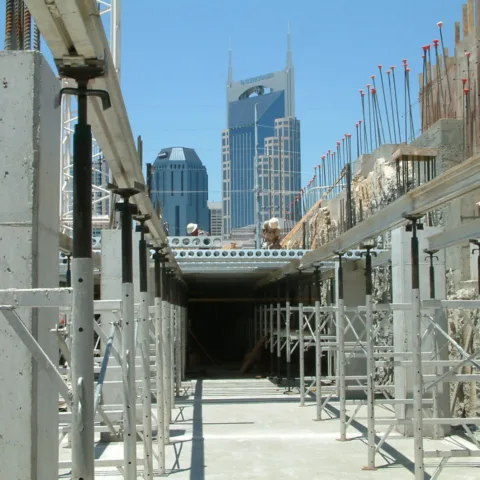
Crain also uses coordination and modeling tools to identify potential conflicts before construction. Our telecommunications work has shown how important early coordination is when systems occupy nearly every available space above, below and around the building.
Identify the Risks Before They Become Schedule Problems
One of the biggest advantages of preconstruction is having time to look beyond the drawings.
Over the years, we’ve learned to evaluate additional risks related to:
- Long-lead equipment and manufacturing timelines
- Workforce requirements
- Procurement and material availability
- Phasing and shutdown constraints
- Utility readiness
- Testing sequences
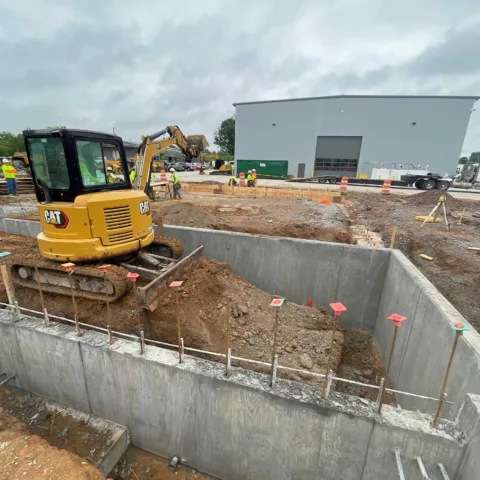
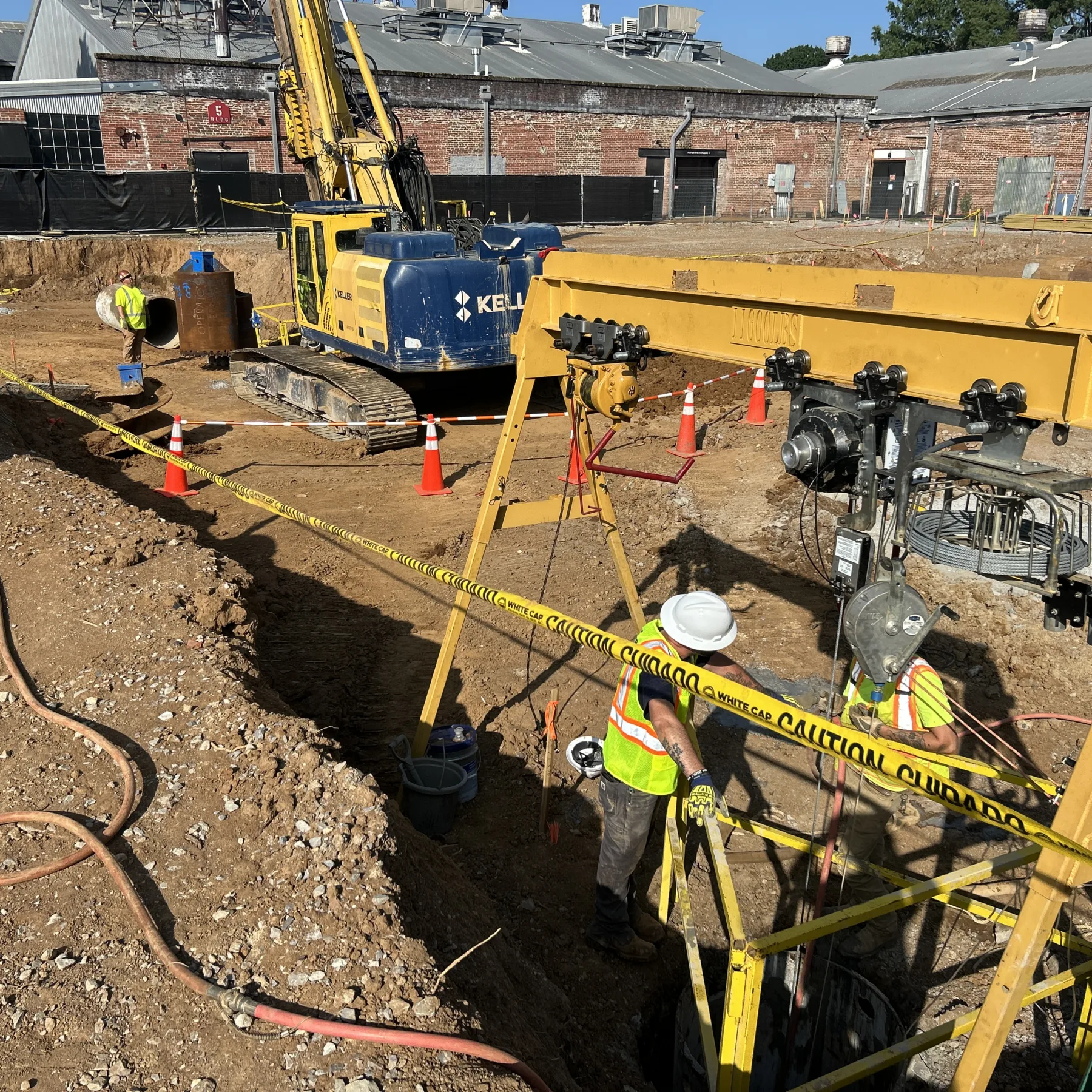
- Site logistics and ground stabilization challenges
- Commissioning requirements
- Operational restrictions
These issues are interconnected.
A piece of equipment with a long manufacturing lead time can derail a project schedule. A utility connection can affect when a system can be energized. A change in sequencing can affect commissioning. A design decision can create an access problem that isn’t discovered until installation.
The earlier the team understands those relationships, the more options they have.
That doesn’t mean elimination of all variables. Construction will always involve some uncertainty. The goal is to identify and anticipate risks, then develop a plan to address them before they become emergencies.
Commissioning Starts During Preconstruction
One of the biggest misconceptions about mission-critical construction is that commissioning happens at the end.
At Crain, we start thinking about commissioning on day one.
The reason is straightforward: you can’t successfully commission a facility you didn’t plan to build correctly.
Understanding how systems will eventually be tested and validated can influence decisions made months or even years earlier. It can affect equipment selection, system layouts, access requirements, sequencing, staffing and documentation.
The same is true for Methods of Procedure, or MOPs. A MOP isn’t something the team pulls together immediately before a critical activity. It requires understanding the systems involved, the operational impact, the proper sequence of work, each role’s responsibilities, and the safeguards required to protect the facility.
Planning those activities early gives the team an opportunity to identify potential problems before work begins.
Quality Has to Be Built Into the Process
Mission-critical QA/QC is about more than checking boxes at the end of a project.
Crain establishes quality expectations during preconstruction so the entire team understands what is required once construction begins.
That includes:
- Installation standards
- Inspection milestones
- Testing requirements
- Documentation
- Redlines
- Turnover packages
- Commissioning support
- Accountability among trade partners
The goal is to create a clear process to prove that critical systems have been installed correctly and are ready to perform.
That documentation also becomes important to the owner. Detailed records give the facility team a clearer understanding of what was installed, how systems were configured and what was tested before turnover.
In an environment where reliability matters this much, you cannot verify quality at the very end. It must be built into the project from the beginning.
Bring the Right Trade Partners Into the Conversation Early
Mission-critical construction is too complex for a general contractor to be isolated from wider planning and discussion.
Electrical, mechanical, controls, fire protection and other specialized trade partners bring expertise that can help identify issues the design team or general contractor might not see on their own.
That’s why Crain brings critical trade partners into the planning process early.
These aren’t transactional relationships. Many of the companies Crain works with have been partners for years, and some have worked alongside our team for decades. That history matters when you’re working on a project requiring high levels of coordination and accountability.
Our long history in the Southeast has allowed us to build a deep network of specialized trade partners. We know the people we are bringing to the table, and they know how we work. They understand our expectations around communication, quality, safety, documentation, and accountability. Crain’s current mission-critical work relies on this combination of technical discipline and long-standing trade relationships.
That familiarity can make a meaningful difference. When a potential issue emerges, the team doesn’t have to spend the first few weeks learning how to work together because there’s already a foundation of trust and a shared understanding of what the project demands. And because trade partners are involved early, their expertise can inform the project before decisions are locked in.
Create a Mission-Critical Mindset Before Work Begins
The technical planning is only part of the equation. Everyone working on the project needs to understand what makes a mission-critical environment different.
That starts with detailed kickoff meetings, risk workshops, constructability reviews and coordination sessions. It means setting expectations for quality, documentation, safety, commissioning, and operational impacts before anyone begins installing equipment.
Most importantly, it means creating a shared understanding that reliability isn’t simply the owner’s responsibility. It belongs to everyone on the project.
As Chad puts it, “We don’t view commissioning, quality, and operational continuity as project closeout activities. We treat them as project drivers from the first day of preconstruction through final turnover.”
That mindset changes how people approach their work.
A mechanical contractor understands why a particular sequence matters. An electrical partner understands the consequences of a missed detail. The superintendent knows which systems require additional coordination. The owner knows what information will be available at turnover.
Everyone is working toward the same definition of success.
The First Pour Is Just the Beginning
Mission-critical construction doesn’t leave room for surprises. Some variables will always be outside the team’s control. But you can identify, discuss, and address a project’s risks before construction begins. That’s why preconstruction matters.
At Crain, we use that time to understand the owner’s operational goals, pressure-test the design, identify procurement and utility constraints, plan for commissioning and MOPs, establish QA/QC expectations, and bring the right trade partners into the conversation.
The concrete pour may be the moment construction becomes visible.
But the decisions that determine how successfully a mission-critical facility will perform start much earlier.
For Crain, that’s what mission-critical preconstruction is about: eliminating uncertainty, aligning the team, and creating a predictable path to a facility ready to perform when it matters most.
Learn more about Crain’s mission-critical construction experience or connect with our team to discuss your next project.